


Selective Laser Sintering
Post-processing and Surface Technology
Additional Services
Our SLS 3D Printing Services at a Glance
Selective Laser Sintering
Selective Laser Sintering (SLS) is the most efficient and widely used additive manufacturing process in the industry for the production of prototypes, small series and series components made of plastic. In this 3D printing process, plastic powder is locally melted layer by layer with a laser to form the finished component. The layer thicknesses in the SLS process are in the range of 0.1 mm.
Since thermoplastic plastics are used in the selective laser sintering process, as in plastic injection molding, fully functional additively manufactured components can be produced in high quality without toolmaking. The mechanical properties of SLS 3D-printed components are comparable to those of injection-molded components.

Material
For the production of your SLS 3D-printed components, 8 thermoplastic plastics are available as standard at prioadd.

Machines
We manufacture your laser-sintered components on 5 modern industrial SLS 3D printing systems from EOS. SLS- machines from the German company Electro-Optical Systems (EOS) are characterized by their high reliability and construction speed.
Post-processing and Surface Technology
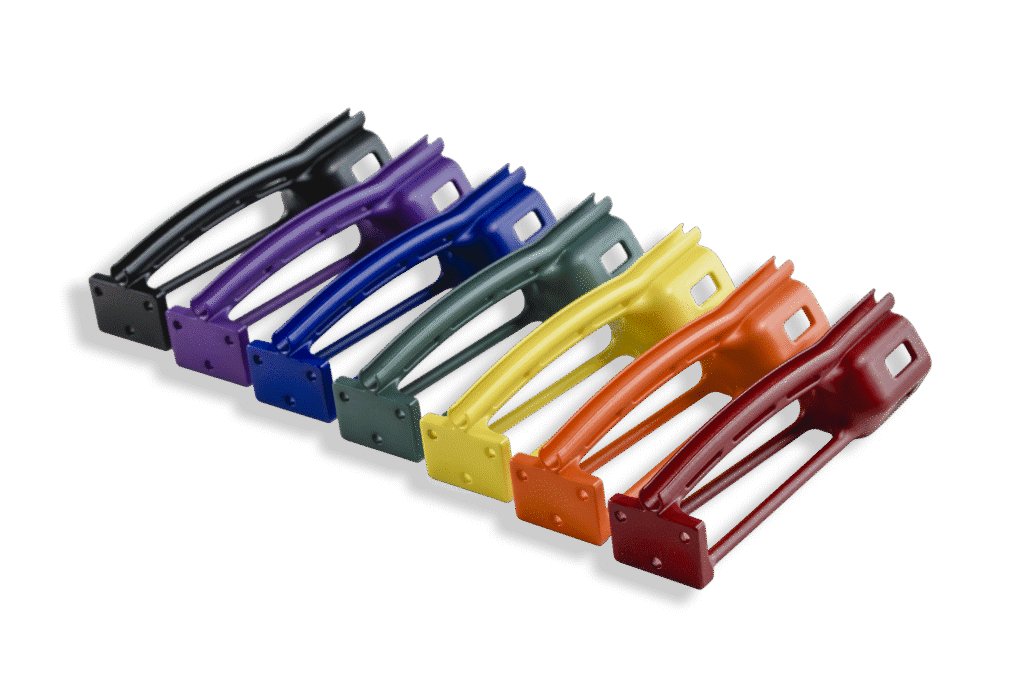
Dyeing
In dip dyeing, the SLS components are immersed in a water bath with dissolved pigments in order to color the surface of the components. Here, the color forms a chemical bond with the component and does not build up.
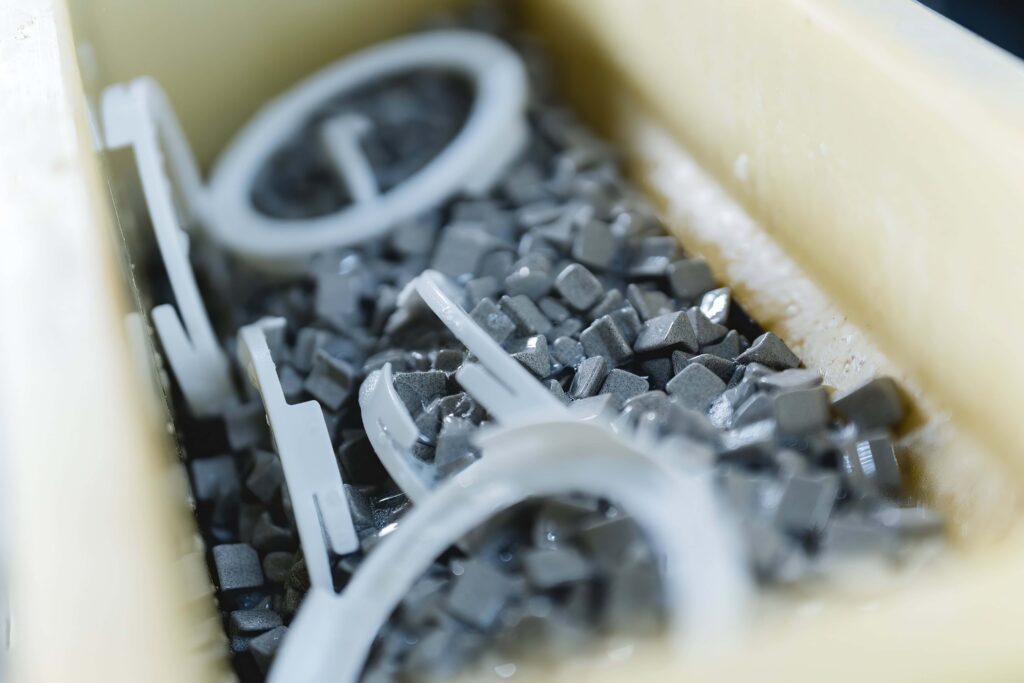
Vibratory Grinding
During tumbling finishing or vibratory finishing, the component surface is mechanically smoothed. In this process, a grinding medium is placed together with the SLS components in a vibrating trough and removes a small amount of material from the component surface. This small amount of material removal results in a significantly smoothed component surface.
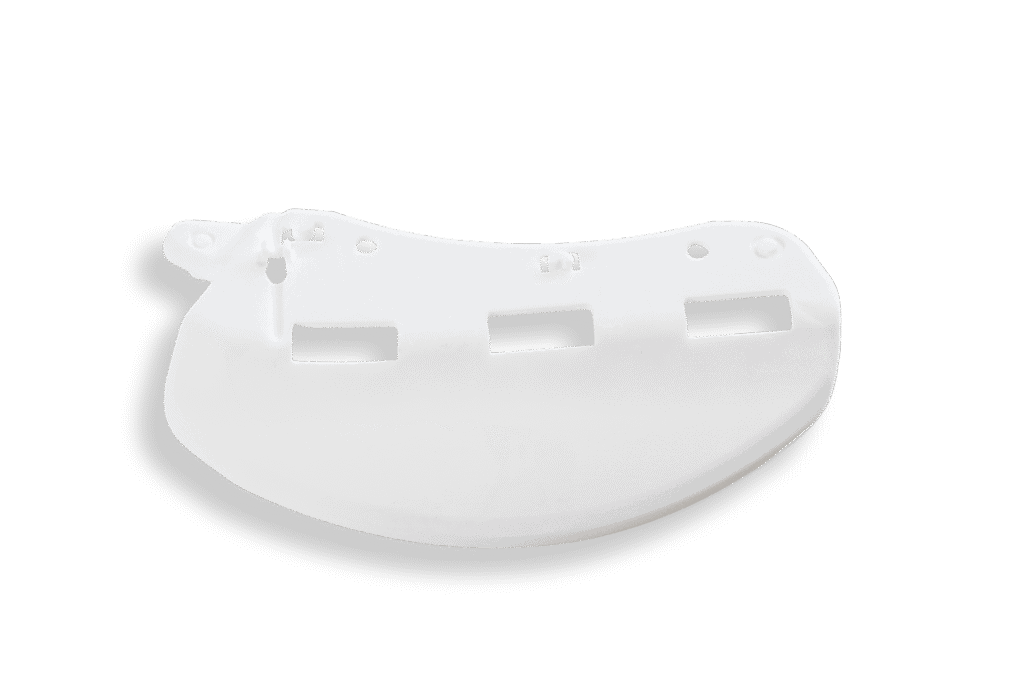
Chemical smoothing
During chemical smoothing, a solvent dissolves the surface of the SLS parts in a controlled manner in order to smooth or seal them. Chemical smoothing raises the surface of SLS components to injection molding level. The pores on the component surface are sealed, meaning that chemically smoothed SLS components are 100% watertight.

Shot peening
Shot peening is a process in which the laser-sintered components are bombarded with plastic beads under high pressure. The plastic beads drum onto the component surface and level it out. This process is often used in combination with dip dyeing to achieve a homogeneous dyeing result.
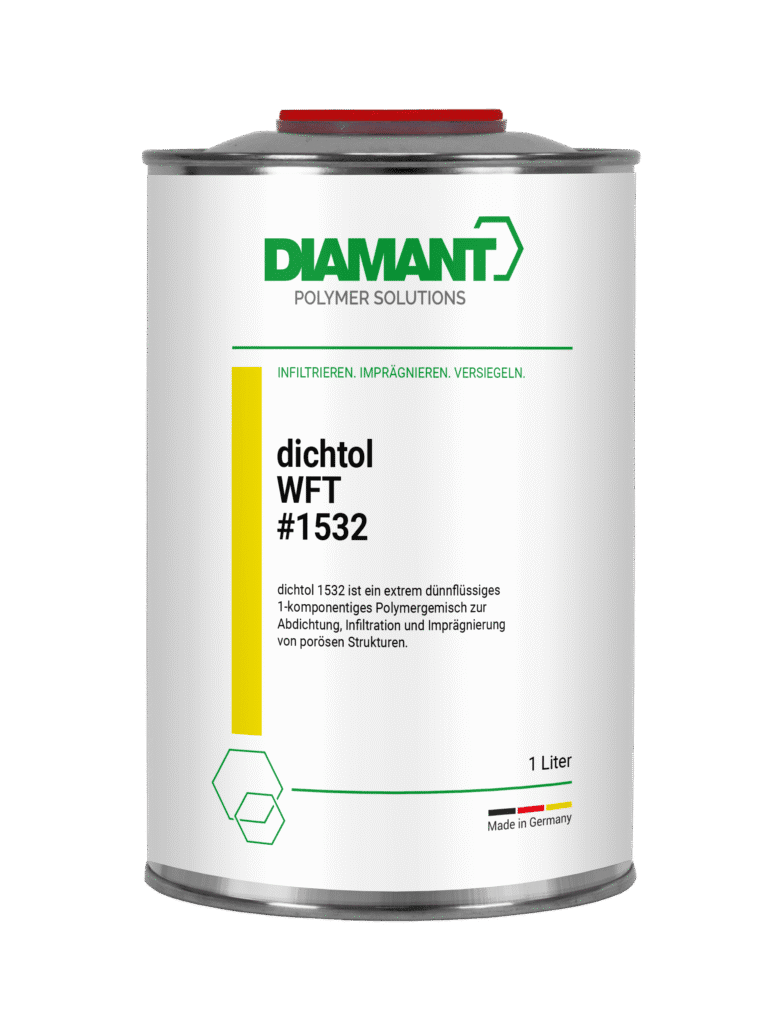
Infiltration
By infiltrating SLS components with a 1-component high-performance polymer, the slightly porous component surface of the SLS parts is sealed and thereby made gas- or watertight. Infiltrated SLS components have drinking water and food approval and are characterized by excellent weather resistance.
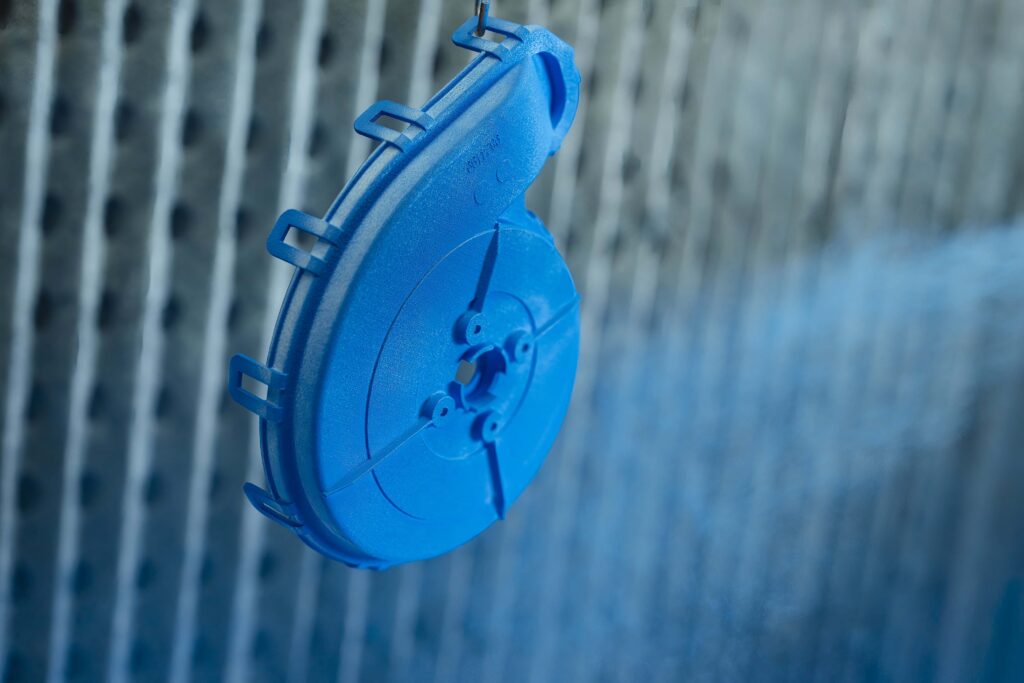
Painting
We coat your SLS components exactly as you need them – whether glossy, matt or with a metallic look. By applying a plastic primer beforehand, the paint adheres ideally to your component and a homogeneous coating result can be achieved.

Mechanical finishing
By mechanical finishing we mean the post-processing of your SLS component on a CNC milling machine, the re-cutting of threads or reaming of fits, as well as the melting in of threaded bushings.

Pad Printing
By means of pad printing, we can print logos, lettering and symbols onto the surface of SLS 3D-printed components. All colors are possible here.
Additional Services
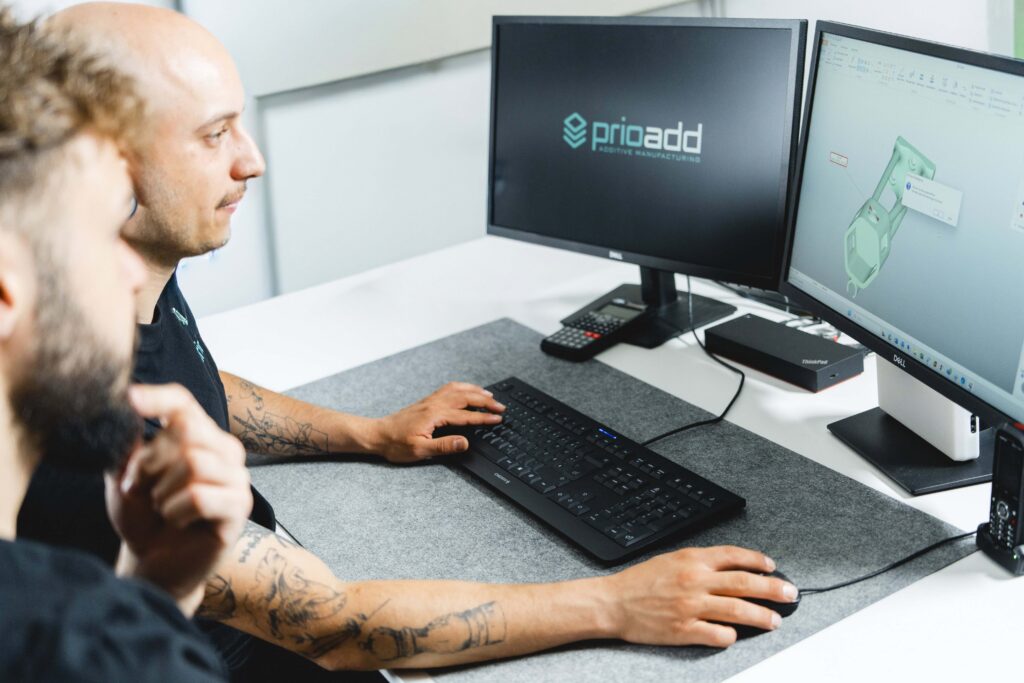
Engineering
We support you in the implementation of your idea or redesign your components so that they are optimally suited for manufacturing using the laser sintering process. For the implementation of our engineering service, we have experienced designers in our team and work with the latest CAD software. We can also support you with reverse engineering projects.
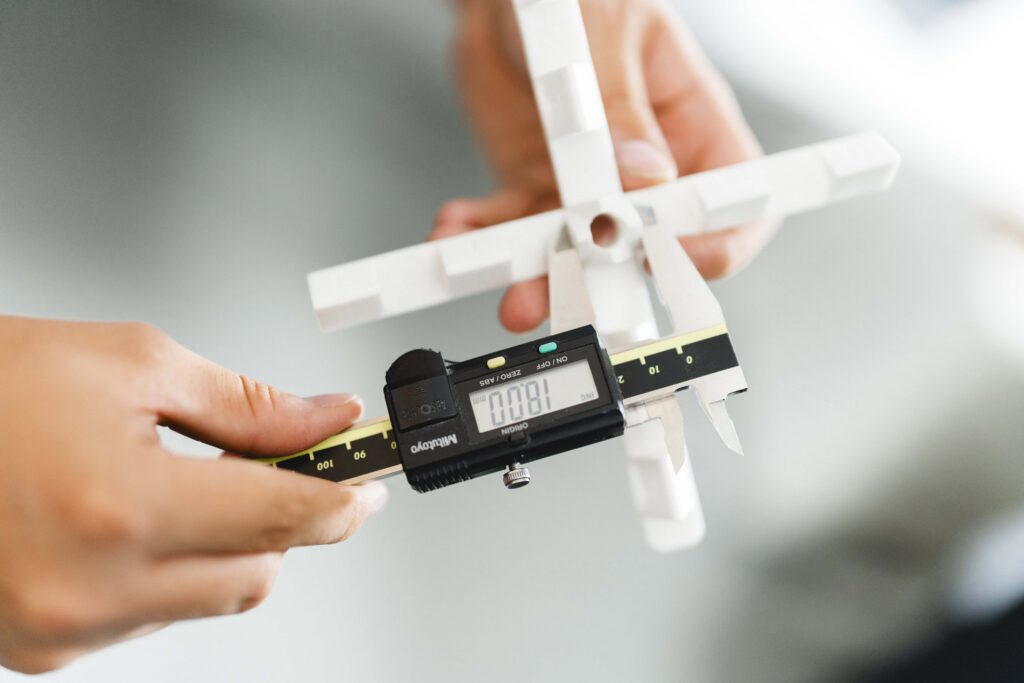
Quality Assurance
In our in-house measuring laboratory, we can measure your SLS components as you need them. The centerpiece of our quality assurance here is a GOM ATOS Capsule 3D scanner. With this 3D scanner, we can create initial sample test reports, measurement logs or false color target-actual comparisons.
Frequently Asked Questions - Services
We offer a comprehensive range of services related to industrial SLS 3D printing. These include additive manufacturing of plastic components, engineering support for component design, various post-processing methods, as well as quality assurance and metrology.
For manufacturing, at prioadd we exclusively rely on industrial SLS 3D printing systems from EOS in Munich. These machines are considered particularly reliable and are among the established systems in industrial 3D printing. Thanks to precise laser technology and stable process control, we can produce plastic components with high detail accuracy and consistent quality – from prototype to series production.
At prioadd we primarily use PA12 (Polyamide 12) for SLS 3D printing. This material offers a very good combination of strength, toughness, and chemical resistance, making it ideal for functional components. Additionally, PA12 can be processed particularly reliably in the SLS process, enabling high detail accuracy and stable mechanical properties. This makes it the most frequently used material.
At prioadd , SLS components can be colored either by dip dyeing or painting. In dip dyeing, the components are placed in a dye bath , so that the color penetrates the outermost material layer, creating a uniform, abrasion-resistant coloring. In painting, the color is applied as a coating to the surface, allowing for different colors and surface finishes such as matte or glossy. The best method depends on the desired appearance and the application of the component.
At prioadd, several methods are available for surface smoothing of SLS components. In vibratory finishing, components are moved together with abrasive media, which slightly smooths the surface. In shot peening, plastic beads are blasted onto the surface under pressure, compacting and evening it out. A particularly smooth and almost pore-free surface can be achieved through chemical smoothing, where the component surface is controllably dissolved and then re-solidified. The best method depends on the requirements for the component’s appearance, feel, and function.
At prioadd, there are two methods to make SLS components waterproof: chemical smoothing and infiltration. In chemical smoothing, the surface of the components is controllably dissolved, which closes the pores and creates a very smooth, dense surface. This can make components up to 100% pressure-waterproof. In infiltration, a high-performance polymer is applied that penetrates the material’s pores and seals them. This method is usually more cost-effective but generally does not make components completely pressure-waterproof.
Yes, logos or inscriptions can be integrated directly into the component. In SLS 3D printing, lettering or logos can be represented as raised or recessed structures within the component during the printing process. The font height should generally be at least 3.5–5 mm to ensure details are clearly visible. Alternatively, inscriptions can also be applied subsequently using pad printing. This method is particularly suitable for fine logos, lettering, or colored markings on the component surface.
At prioadd, SLS components can be mechanically post-processed in various ways. These include, for example, CNC milling, re-drilling or reaming of fits, thread cutting, and the melting in of metal threaded inserts. These machining post-processes make it possible to achieve tight tolerances or equip components with precise bores and durable threads. For CNC post-processing, we also utilize the machinery of our partner priomold.
We support you in both the design and optimization of your components for SLS 3D printing. Upon request, we can directly revise your component in CAD and constructively improve it as an engineering service, for example, regarding wall thicknesses, component geometry, or manufacturability. Alternatively, we can also guide you during your own component design and provide recommendations to ensure the component is optimally designed for the SLS process. Smaller questions or quick assessments are often clarified directly over the phone – this brief consultation is, of course, free of charge.
prioadd offers various quality assurance measures to ensure consistently high component quality in SLS 3D printing. These include, among others, dimensional checks, visual inspections, material tests, and documented quality processes during manufacturing. Depending on the requirements, components can also be additionally measured or tested to ensure they meet technical specifications and quality standards.