


Selective Laser Sintering
Post-processing and Surface Technology
Additional Services
Pad Printing of SLS 3D-Printed Parts
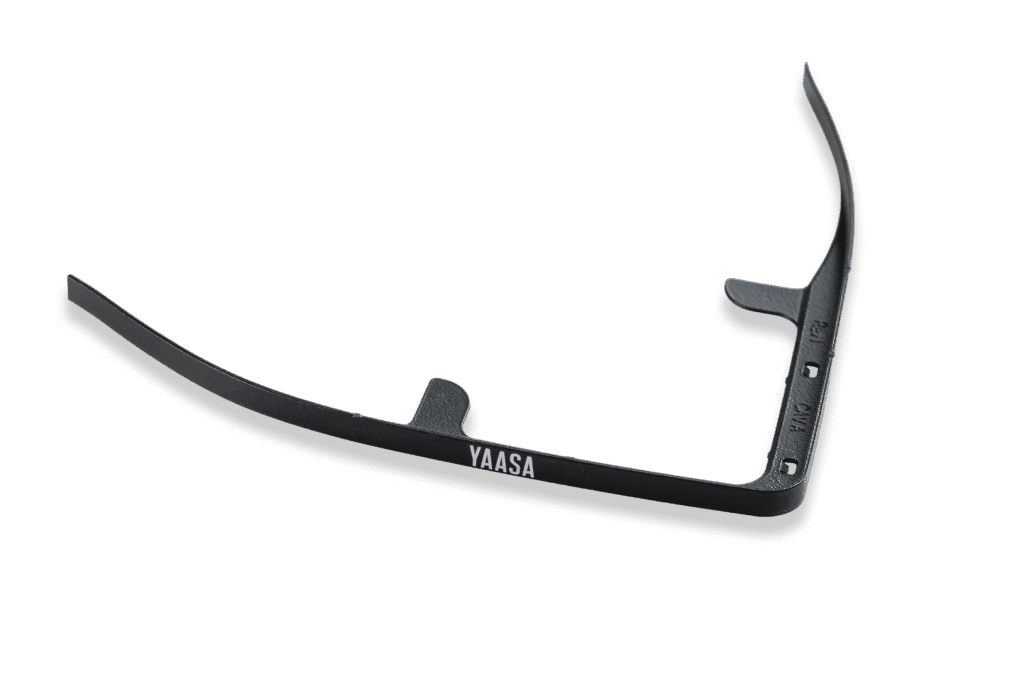
Using pad printing, we can print logos, lettering, and symbols on the surface of additively manufactured laser-sintered parts. For the best possible results and ideal print adhesion, we recommend chemical smoothing or vapor honing of the component surface prior to pad printing. Pad printing is available in all colors and is also suitable for series production.


Advantages of Pad Printing
Ideal for parts that…
-
are to be provided with precise logos, lettering, or symbols
-
are to be manufactured in series and require custom logos
Compatible Materials
- PA2200 (PA12 white)
- PA2201 (PA12 translucent)
- PA3200GF (PA12 glass-filled white)
- Alumide (PA12 with Aluminum)
- PA2241FR (PA12 flame-retardant white)
- PA2210FR (PA12 flame-retardant white)
- PA1101 (PA11 white)
Frequently Asked Questions - Pad Printing
Pad printing involves applying logos, labels, or symbols to the surface of SLS 3D-printed components. This allows components to be individually identified or provided with functional markings. .
In principle, all colors are possible with pad printing. This allows components to be provided with company logos, functional symbols, or color markings, for example.
For optimal printing results, surface pretreatment is recommended, for example through chemical smoothing or shot peening. This makes the surface more homogeneous and improves the print quality.
Yes. Pad printing involves initial costs because a suitable fixture for the component and a printing pad must be created. These are one-off productions. As a result, the cost of pad printing per component decreases as the quantity increases, making the process particularly suitable for series production.
The name pad printing comes from the elastic silicone pad used in the printing process. This pad picks up the ink from a printing plate and then transfers it to the component. Due to its flexible shape, the pad can also adapt to uneven or slightly curved surfaces, allowing logos or labels to be printed precisely on differently shaped components.